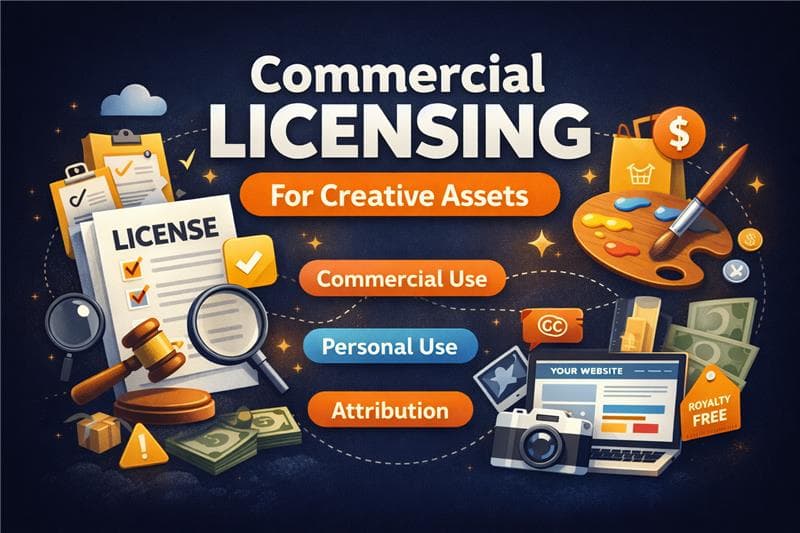
Understanding licensing terms and how to use creative assets safely in your commercial projects.
Navigating the world of digital licensing can be intimidating. At Wallpezia, we frequently receive emails from users who have found the perfect image for a project but are hesitant to hit the download button. The questions are almost always the same: "Can I use this for a client?" "Does 'free' mean I can put it on a t-shirt?" or "What happens if I use this incorrectly?"
We understand this anxiety. Legal jargon is confusing, and the fear of accidentally infringing on a copyright can paralyze the creative process. Designers and business owners want to focus on their work, not spend hours decoding terms of service.
This guide breaks down commercial licensing into simple, plain English based on our experience helping users navigate these rules every day.
What Is a Commercial License?
In simple terms, a commercial license is a permission slip. It grants you the right to use a creative asset—like an image, icon, or texture—in a project that is intended to make money or promote a business.
When you download a file, you aren't buying the copyright (the actual ownership) of that image. You are obtaining a license to use it.
Anytime you build a website for a paying client, print flyers for a business, or run ads to sell a product, you are engaging in 'commercial use.' This is why a commercial license matters—it proves the creator actually gave you permission to use their work for profit, usually in exchange for a fee or following their rules.
Common Licensing Terms Users Get Wrong
Through our work reviewing asset usage, we see the same terms causing confusion time and time again. Here is how we explain them to our users without the legalese.
Commercial Use vs. Personal Use
This is the most critical distinction.
- Personal Use: This usually means you are using the image for something that generates no money and promotes no business. Examples include a desktop wallpaper for your home computer or a birthday card for a friend.
- Commercial Use: This involves money, business, or brand promotion. Even if you aren't selling the image directly, if it is used to help a business look good (like on a company blog or presentation), it typically falls under commercial use.
Free Use vs. Unrestricted Use
"Free download" does not mean "do whatever you want." A file might be free to download for personal use but require a paid license for commercial use. We often see users assume that because they didn't pay for a file, it has no rules. This is rarely the case.
Attribution Requirements
Some licenses permit free commercial use, but there is often a catch: 'attribution.' This just means you have to give credit where it's due (for example, 'Image by [Artist Name]'). It is easy to forget this line in video descriptions or website footers, but be careful—skipping it technically invalidates your license.
Modification and Redistribution
Most commercial licenses allow you to modify an image (change colors, crop it) to fit your design. However, they almost never allow redistribution. You cannot take a downloaded PNG, do nothing to it, and offer it for download on another website or sell the raw file to someone else.
How to Use Creative Assets Safely in Commercial Projects
Before using any creative asset in a business project, it’s important to understand how different file formats behave. Our guide on Best wallpapers for designerexplains how image formats affect quality and usage.
To keep your projects safe and professional, we recommend a few practical steps before you incorporate any asset into a design.
1. Check the License Before You Design
Don't wait until the project is finished to check if you have the rights to the images. We have seen designers forced to redo entire layouts because they realized too late that an asset wasn't cleared for commercial use.
For full usage details, review our commercial license terms before downloading.
2. Understand the Scope
Some licenses have limits. For example, a standard license might allow you to print 500 flyers, but an extended license might be required for 50,000 product packages. Always check if there is a limit on "impressions" or "reproductions."
3. Save Your Proof
When you download a licensed asset, keep a record of where it came from and the license terms at that time. If a client asks later, "Do we have the rights to this photo?", you want to be able to answer confidently.
Mistakes That Can Cause Licensing Issues
In our experience, issues rarely arise from malice; they arise from misunderstanding. These are the pitfalls to avoid:
- Assuming "Royalty-Free" Means Free: "Royalty-free" is a licensing term that means you pay once and don't have to pay every time you use the image. It does not mean the image costs zero dollars.
- Mixing Assets: Be careful when combining assets from different sources. If one part of your design requires attribution and another forbids modification, it can get complicated.
- Ignoring "Editorial Only" Labels: Some images (often of celebrities or trademarked events) are marked "Editorial Use Only." You cannot use these to advertise a product, yet we frequently see them used in marketing materials incorrectly.
How We Handle Licensing at Wallpezia
We know that ambiguity is the enemy of productivity. When we structured our approach at Wallpezia, our goal was to remove the guesswork.
We focus on clarity. We believe that when a user looks at an asset, they shouldn't need a law degree to understand if they can use it. We review our categories to ensure that permissions are straightforward, helping you distinguish between what is safe for a commercial mood board and what is purely for personal inspiration.
Our aim is to provide a library where you can find what you need and use it with confidence, knowing exactly what is allowed.
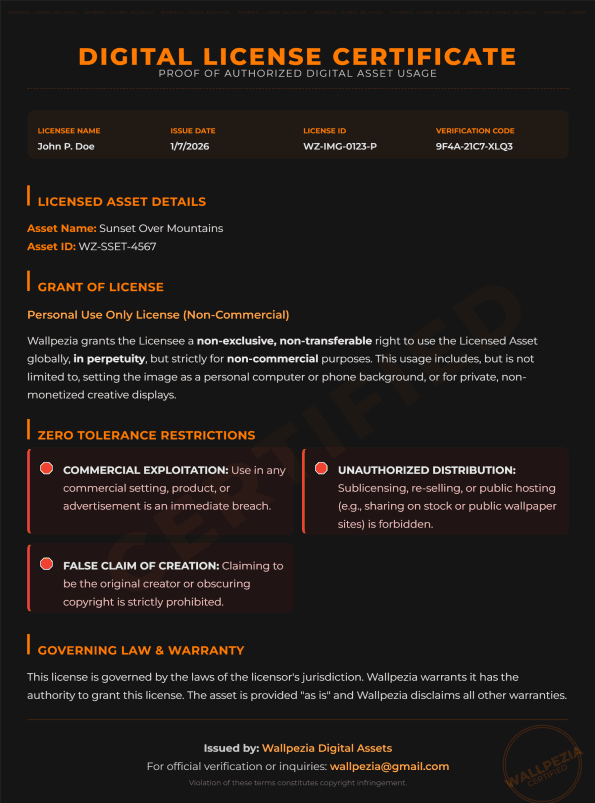
For full usage details, review our commercial license terms before downloading.
Final Thoughts
To work professionally, you have to understand licensing. It isn't just about following rules; it's about respecting the ecosystem of creators and protecting your own reputation with clients.
Make a habit of checking the rules before you start. That quick check is the best way to keep your workflow professional and fully compliant.
For ready-to-use assets, explore our curated selection of
Designers looking for safe assets can explore our collection of free wallpapers and transparent PNG images, all curated with clear usage guidelines.