In the visually driven world of today, the demand for high-quality imagery has never been higher. From e-commerce brands needing crisp product shots to influencers requiring daily content, and couples wanting cinematic documentation of their weddings, the market is thriving.
Market research shows that the global photography services market is experiencing steady growth, driven largely by the explosion of digital content and social media marketing. Brands are moving away from generic stock images in favor of authentic, custom storytelling, creating a massive opportunity for new photographers.
Photography is no longer just a hobby; it is a viable, scalable, and potentially lucrative career path. However, bridging the gap between being a "person with a camera" and running a profitable business requires more than just artistic talent. It requires strategy, legal structure, and a deep understanding of the modern market.
If you are ready to turn your creative passion into a sustainable income, this guide covers everything you need to know about how to start a photography business.
1. Decide Your Photography Niche
The most successful photographers are not generalists; they are specialists. Choosing a niche allows you to target a specific audience, streamline your marketing, and command higher rates.Profitable photography niches are defined by specific client needs rather than broad categories.
Why Niche Down?
Clients want experts. A restaurant owner looks for a food photographer, not a wedding photographer who also shoots food. Specializing builds trust and authority.
Top Profitable Niches:
- Wedding & Elopement Photography: High pressure, but high reward. Trends are shifting toward candid, documentary-style editing.
- Brand & Commercial Photography: Industry reports indicate a surge in demand for short-form video and hybrid photo/video packages for social media.
- Product Photography: With the increase in e-commerce, high-end product styling is in massive demand.
- Real Estate & Architecture: Essential for realtors and Airbnb hosts.
- Stock Photography: Creating generic but high-quality images for licensing.
- Portrait & Headshots: Needed for corporate profiles and personal branding.
Action Tip: Evaluate your local market. Is it oversaturated with wedding photographers? Perhaps there is a gap in the market for specialized personal branding photography.
2. Learn the Fundamentals & Improve Skills
Before you accept a cent from a client, your technical skills must be solid. A professional camera does not make a professional photographer; your understanding of light, composition, and editing does.
Key Technical Areas to Master:
- The Exposure Triangle: Understanding the relationship between ISO, Aperture, and Shutter Speed.
- Lighting: Learning to shape natural light and master artificial flash.
- Composition: Moving beyond the "rule of thirds" to use leading lines, framing, and negative space effectively.
- Post-Processing: Mastering software like Adobe Lightroom and Photoshop to give your images a professional polish.
For a deeper dive into structuring your images, read our Photography Composition Guide: Tips to Improve Your Photos.
Additionally, if you are just starting out, ensure you have mastered the essentials by reviewing What Are the 7 Basics of Photography? A Complete Beginner’s Guide.
3. Create a Business Plan
A photography business plan template is your roadmap. It stops you from spending money blindly and keeps you focused on revenue goals.
Your Plan Should Include:
- Target Audience: Who is your ideal client? (e.g., "Luxury brides in New York" or "Small sustainable fashion brands").
- Services Offered: Will you sell digital files, prints, albums, or subscription content packages?
- Startup Costs: Camera gear, website hosting, insurance, and marketing budget.
- Competitor Analysis: What are others charging in your area? What can you offer that they don't?
- Pricing Strategy: Calculate your "Cost of Doing Business" (CODB). You must know exactly how much it costs you to run your business for a year before you set a price for a single shoot.
4. Register Your Photography Business Legally
Legitimacy protects you. Operating "under the table" puts you at risk and limits your growth.
Steps to Legalize:
- Choose a Business Structure: Most photographers start as a Sole Proprietorship (easiest to set up) or an LLC (offers liability protection for personal assets).
- Register Your Name: If you aren't using your own name (e.g., "City Lights Photography"), you may need to file a "Doing Business As" (DBA) name.
- Taxes: Get an Employer Identification Number (EIN) or tax ID. Set aside 25-30% of every payment for taxes.
- Contracts: Never shoot without a contract. It outlines expectations, cancellation policies, and usage rights.
Understanding Licensing:
When working with brands, you aren't just selling a photo; you are selling theright to use it. Understanding the difference between personal use and commercial use is vital for profitability. Check out our guide on Commercial License Explained Simply to understand how to price for usage.
5. Invest in the Right Equipment
In the modern industry, the debate between DSLR and Mirrorless is largely over: Mirrorless cameras are the industry standard due to their autofocus capabilities and lighter weight.
Essential Gear List:
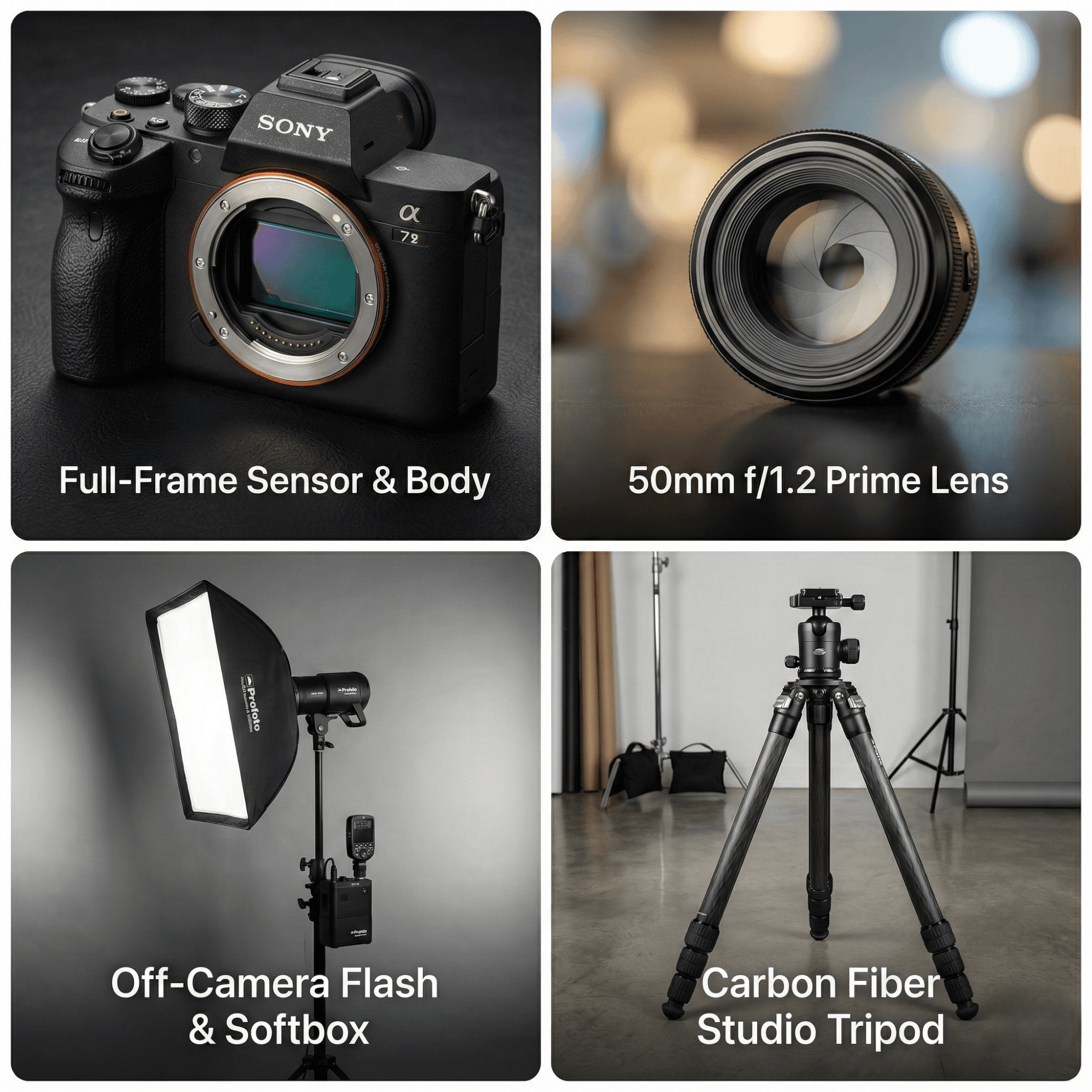
- Camera Body: Full-frame mirrorless cameras (Sony Alpha, Canon R series, or Nikon Z series) offer the best dynamic range.
- Lenses:
- Prime Lenses (35mm, 50mm, 85mm): Sharper, wider apertures (f/1.8 or f/1.4), great for low light and portraits.
- Zoom Lenses (24-70mm, 70-200mm): Versatile, essential for events and weddings.
- Lighting: A simple speedlight and a 5-in-1 reflector are great starting points.
- Support: A sturdy tripod is non-negotiable for landscape, product, and real estate photography.
- Editing Hardware: A color-accurate monitor and a fast computer are just as important as the camera.
6. Build a Strong Portfolio
Your portfolio is your resume. Clients do not care what photography school you went to; they care about what you can produce for them.
How to Build a Portfolio with No Clients:
- Model Calls: Offer a free session to a model in exchange for portfolio use.
- Mock Projects: Buy products and shoot them at home to build a product photography portfolio.
- Styled Shoots: Collaborate with local florists, makeup artists, and venues to create a fake wedding setup.
- Curate Ruthlessly: Only show the work you want to get hired for. If you want to shoot high-end fashion, remove the photos of your pet dog.

7. Set Pricing & Packages
One of the biggest mistakes beginners make is underpricing. This leads to burnout and attracts clients who do not value your work. A solid photography pricing guide focuses on sustainability, not just "undercutting the competition."
The Cost of Doing Business (CODB) Formula: You cannot profit until you cover your costs. Example: Fixed Costs (Insurance, Software, Gear depreciation, Internet): $10,000/year Desired Salary: $50,000/year Total Needed: $60,000 If you can realistically shoot 30 weddings a year, your base cost per wedding is $2,000 just to break even.
Pricing Models:
- Hourly Rate: Common for events. Ensure you factor in editing time, not just shooting time.
- Package Pricing: (Recommended) Bundle the session fee, editing, and a set number of images. This increases the perceived value.
- Value-Based Pricing: Charging based on the value the image brings to the client (common in commercial work).
Upselling: Increase revenue by offering printed albums, extra retouching, or expedited delivery.
8. Marketing Your Photography Business
You can be the best photographer in the world, but if no one knows you exist, you won't make money. Your photography marketing strategy must be consistent and multi-channel.
Modern Marketing Strategies:
- SEO (Search Engine Optimization): Optimize your website for keywords like "Wedding Photographer in [City]" or "Product Photography Studio."
- Instagram & TikTok: These are visual search engines. Post Behind-the-Scenes (BTS) reels, editing tutorials, and final results to build authority.
- Google My Business: This is crucial for local SEO. Ask every client to leave a review here.
- Networking: Build relationships with vendors in your niche (e.g., wedding planners or marketing agencies).

9. Client Management & Professionalism
The client experience is just as important as the final image. A professional workflow leads to referrals.
- Communication: Reply to inquiries within 24 hours.
- Contracts & Deposits: Use a CRM (Customer Relationship Management) tool like HoneyBook or Dubsado to automate contracts and secure 50% retainers before booking.
- Expectation Setting: Be clear about turnaround times. If you say 2 weeks, deliver in 1.5 weeks.
- Delivery: Use professional galleries (like Pixieset or Pic-Time) to deliver high-resolution images, not Google Drive or Dropbox.
10. Scaling Your Photography Business
Once you are fully booked, you hit a ceiling on how much you can earn with your time. Scaling allows you to earn more without working 24/7.
Income Projection Example:
- Solo Shooter: Capped at ~30 weddings @ $3k = $90k/year.
- Scaled Business: 30 weddings (Solo) + 20 Associate Weddings (@ $1.5k profit) + Print Sales + Stock Licensing = $150k+/year.
Ways to Scale:
- Associate Shooters: Hire other photographers to shoot weddings under your brand while you edit or manage.
- Outsource Editing: Use private editors or AI tools to speed up your workflow.
- Passive Income: Sell presets, photography courses, or prints.
- Licensing: Upload your unused high-quality images to stock sites. Read more about What are the best platforms to license commercial images legally? to generate passive revenue.
⚠️ Common Mistakes to Avoid When Starting a Photography Business
Avoiding these pitfalls can save you years of frustration and thousands of dollars.
- Underpricing Services: Charging too little devalues your brand and attracts difficult clients.
- Buying Too Much Gear: You do not need the most expensive camera to start. Invest in education first.
- Not Using Contracts: Shooting without a contract leaves you legally vulnerable to non-payment or liability.
- Ignoring SEO: Social media is borrowed land. A website with strong SEO is an asset you own.
- Ignoring CODB: If you don't know your Cost of Doing Business, you are likely losing money on every shoot.
- Poor Communication: Ghosting clients or late replies will kill your reputation faster than bad photos.
- No Data Backup: Hard drives fail. Without a 3-2-1 backup system, you risk losing client memories forever.
- Copying Competitors: Inspiration is fine, but blatant copying prevents you from developing a unique style.
📋 Photography Business Startup Checklist
Use this actionable photography business checklist to track your progress:
- [ ] Choose Your Niche: Define exactly what you shoot and who it is for.
- [ ] Master Fundamentals: Ensure you fully understand exposure, lighting, and composition.
- [ ] Calculate Startup Cost: Determine your budget for gear and legal fees.
- [ ] Register Business: File for your LLC or Sole Proprietorship and get an EIN.
- [ ] Create Contracts: Draft legal agreements for all services you offer.
- [ ] Build Portfolio: Execute 3-5 mock shoots to fill your gallery.
- [ ] Set Pricing Packages: Calculate your CODB and set profitable rates.
- [ ] Launch Website: Publish a portfolio site optimized for local SEO.
- [ ] Optimize Local SEO: Set up your Google My Business profile.
- [ ] Create Instagram Presence: Start posting consistently with strategic hashtags.
- [ ] Implement Backup System: Purchase external hard drives and a cloud storage plan.
- [ ] Track Income & Expenses: Open a business bank account and set up accounting software.
Usability & Professional Tips
- Backup Strategy: Follow the 3-2-1 rule. 3 copies of data, on 2 different media types, with 1 offsite (cloud). Hard drives fail; don't let a failure destroy your business.
- Brand Identity: Ensure your website, logo, and editing style are cohesive. Your brand is your promise to the client.
- Consistency: Presets help, but ensure your white balance and skin tones are consistent across a whole gallery. Small photography business tips often boil down to consistency in quality and service.
Conclusion
Starting a photography business is an exciting journey that blends creativity with entrepreneurship. The market is competitive, but there is always room for photographers who offer exceptional service, a unique eye, and professional reliability.
Remember, the gear gets you the shot, but the business strategy pays the bills. Choose your niche, protect yourself legally, and never stop learning.
If you are looking for visual inspiration or high-quality wallpapers to spark your creativity, explore Wallpezia's extensive collections. Your journey to becoming a professional photographer starts with that first shutter click—make it count.
Frequently Asked Questions (FAQs)
1. How much does it cost to start a photography business? The average photography startup cost varies, but a lean startup can cost between $2,000 and $5,000. This covers a reliable full-frame camera, one good lens, a computer for editing, business registration, and website hosting. You can upgrade gear as you earn.
2. How much can a professional photographer realistically earn per year? Professional photographer income ranges widely. Part-time hobbyists may earn $10k–$25k, while full-time established professionals typically earn between $45k and $85k. High-end wedding or commercial photographers often exceed $100k–$150k annually.
3. Should I specialize or offer multiple photography services? It is better to specialize. While offering multiple services seems like it opens more doors, it often confuses potential clients. Specializing makes you the "go-to" expert in that field, allowing you to charge higher premium rates.
4. Do I need a license to start photography?
You typically need a general business license from your city or county to operate legally. If you are shooting on private property or in National Parks, you may also need specific photography permits.
5. Is mirrorless better than DSLR for business photography? Yes, for most modern businesses. Mirrorless cameras offer superior autofocus (crucial for sharp images), "what you see is what you get" electronic viewfinders, and silent shooting modes, which are essential for weddings and events.
6. How do beginner photographers get clients?
Start with your inner circle. Ask friends and family to model. Post this work on social media and tag local businesses. Offer a limited-time "portfolio building" discount, and focus heavily on local SEO so strangers can find you on Google.
7. Can I start a photography business part-time? Absolutely. Many successful photographers start as "weekend warriors." This allows you to build your portfolio and client base without the financial pressure of needing immediate full-time income.
@All assets in this blog are sourced from Wallpezia